
Electromechanical & Electronic Components
How to Choose Power Cords for Different Applications
17th September 2026
By Team Elcom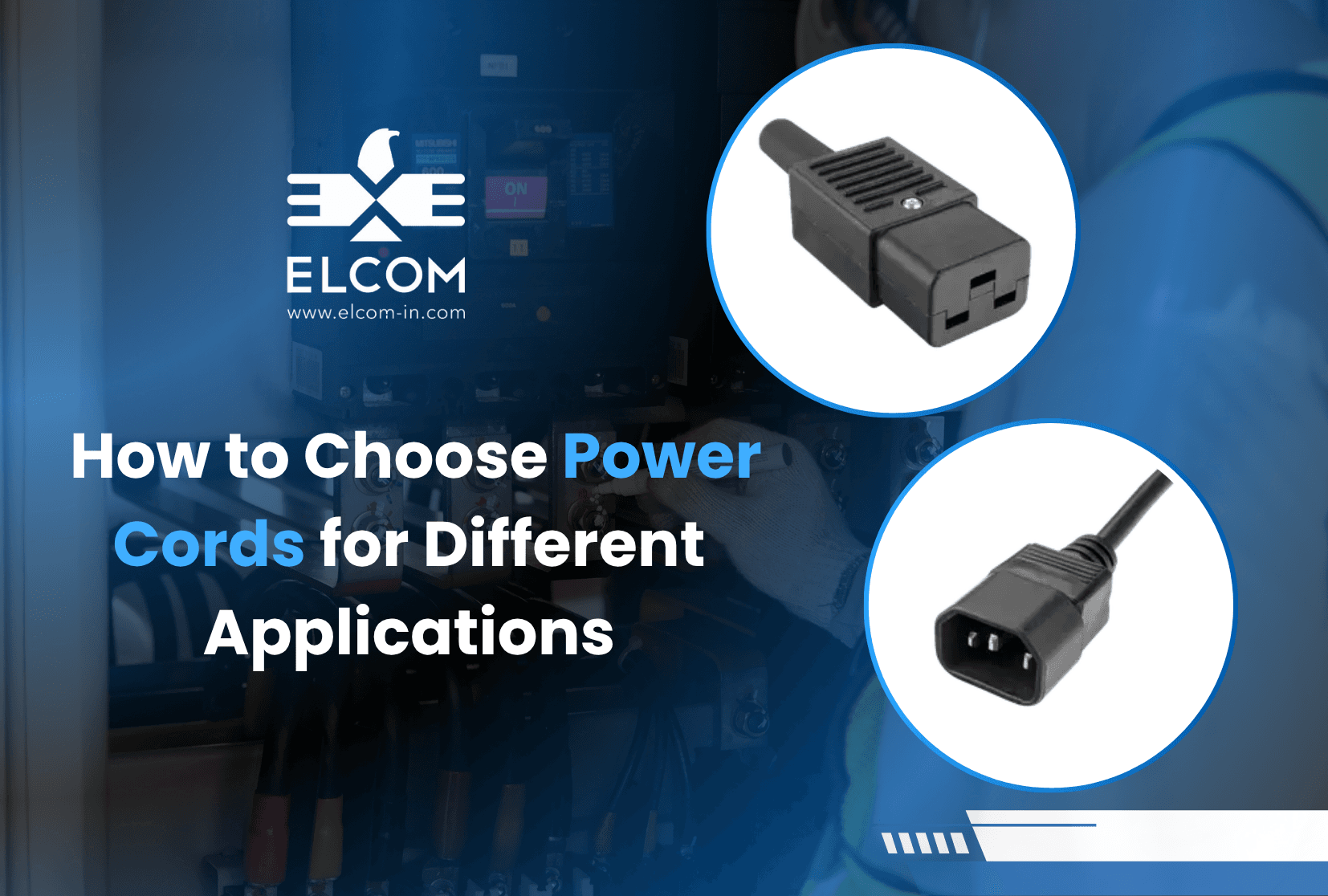
Reliable power distribution begins with selecting the right power cord. In industrial, commercial, and IT environments, cable assemblies must handle specific electrical loads, operating conditions, and compliance requirements while maintaining consistent performance.
Different applications place different demands on power connectivity systems. Equipment such as CNC machines, automation panels, servers, medical devices, and power distribution units requires cable solutions that match their voltage ratings, current capacity, connector configurations, and environmental conditions.
Choosing the appropriate power cord involves more than ensuring a physical connection. Factors such as load handling capability, insulation quality, connector standards, and application-specific requirements play a critical role in ensuring safety, operational reliability, and long-term equipment performance.
Why Power Cord Selection Matters
A power cord serves as the critical link between an electrical source and the equipment it powers. While often overlooked, it plays a significant role in maintaining operational stability and preventing electrical failures.
An improperly selected power cord can lead to:
- Voltage drops
- Overheating
- Equipment malfunction
- Reduced energy efficiency
- Premature component failure
- Increased safety risks
In industrial and commercial environments where equipment operates continuously, selecting the right power cord becomes essential for maintaining uptime and reducing maintenance costs.
Key Technical Factors to Consider Before Selecting a Power Cord
System performance is directly influenced by the specification of the power cord used in the installation. Each application operates under defined electrical loads and environmental conditions, making accurate selection essential for stable operation. Evaluating technical parameters before deployment helps ensure consistent performance and reduces the risk of system inefficiencies.
1. Voltage and Current Ratings
The electrical rating of a power cord must match the power requirements of the connected equipment.
Important considerations include:
- Operating voltage
- Current carrying capacity
- Continuous load requirements
- Peak load conditions
Underrated cables can generate excessive heat, while oversized cables may unnecessarily increase costs.
2. Connector Compatibility
Every power cord must be compatible with the equipment inlet and power source.
Common connector configurations include:
- IEC C13/C14
- IEC C19/C20
- Country-specific plug standards
- Custom industrial connectors
Connector selection should align with both electrical requirements and regulatory standards.
3. Cable Construction and Conductor Size
The conductor size of a power cord determines its ability to safely carry electrical current.
Selection depends on:
- Load requirements
- Installation distance
- Voltage drop limitations
- Environmental conditions
Higher current applications generally require larger conductor cross-sections to maintain efficient power transmission.
4. Environmental Conditions
The operating environment significantly influences power cord performance.
Factors to evaluate include:
- High temperatures
- Moisture exposure
- Dust accumulation
- Chemical exposure
- Mechanical vibration
- Outdoor installation conditions
Applications operating in demanding environments often require specialized cable constructions and protective insulation materials.
5. Compliance and Safety Certifications
A compliant power cord ensures adherence to recognized international safety standards.
Certifications may include:
- UL
- CSA
- VDE
- ENEC
- BIS
- IEC compliance requirements
Certified products help reduce safety risks and simplify regulatory compliance.
Considering these factors helps organizations select a power cord that meets both operational and safety requirements. A well-matched solution supports consistent power delivery, reduces maintenance issues, and improves the overall reliability of connected equipment.
Understanding Elcom International’s Power Cord Solutions
Different industries require specialized cable assemblies designed for specific operating conditions. Elcom International manufactures a wide range of power cord solutions that support industrial, commercial, IT, and infrastructure applications.
-
Overmoulded Power Cords
Overmoulded assemblies are designed to provide enhanced mechanical strength and cable retention.
Key features include:
- Superior strain relief
- Improved durability
- Enhanced connector protection
- Better resistance to repeated movement
- Reduced risk of cable pull-out
Applications include:
- Control panels
- Medical equipment
- Laboratory instruments
- Automation systems
- Consumer electronics
- Test and measurement devices
The overmoulding process improves the durability of each power cord, making it suitable for demanding operational environments.
-
C19 Power Cords
A C19 power cord is specifically designed for high-current applications commonly found in critical IT infrastructure. Unlike standard connectors, it can support higher power loads required by enterprise-grade equipment.
Typical applications include:
- Servers
- Blade server systems
- Data centre racks
- Network switches
- Power Distribution Units (PDUs)
- UPS systems
Industries using a C19 power cord include:
- Data centres
- Telecommunications
- Cloud computing facilities
- Financial institutions
- Enterprise IT infrastructure
The growing demand for high-density computing environments has increased the importance of selecting the right C19 power cord for reliable power distribution.
-
Industrial Power Cords
An industrial power cord is engineered to withstand harsh operating conditions where standard cables may fail.
These solutions are designed with:
- Heavy-duty insulation
- Enhanced abrasion resistance
- Flexible cable construction
- High-current carrying capability
- Improved mechanical protection
It is commonly used in environments exposed to heat, dust, vibration, oil, and moisture.
Applications include:
- CNC machines
- Robotics systems
- Packaging machinery
- Material handling equipment
- Industrial automation systems
- Production lines
Industries that rely on industrial power cords include automotive manufacturing, pharmaceuticals, food processing, chemicals, and heavy engineering.
How Different Industries Choose Power Cords
The selection of a power cord often depends on equipment requirements and operational conditions.
-
Data Centres and IT Infrastructure
High-performance servers require a power cord capable of handling elevated current loads without compromising reliability.
Common equipment includes:
- Server racks
- PDUs
- UPS systems
- Enterprise storage systems
A C19 power cord is frequently chosen because of its ability to support high-power applications and continuous operation.
-
Industrial Manufacturing
Manufacturing facilities require a power cord capable of operating under constant mechanical stress.
Typical applications include:
- CNC machining centres
- Welding systems
- Industrial control cabinets
- Conveyor systems
An industrial power cord provides the durability needed for these demanding environments.
-
Automation and Control Systems
Automation systems rely on uninterrupted power delivery.
Applications include:
- PLC panels
- Robotics cells
- Motion control equipment
- Smart manufacturing systems
A reliable power cord helps maintain operational continuity and minimize downtime.
-
Medical Equipment
Medical devices require a power cord designed for reliability and compliance with strict safety standards.
Applications include:
- Diagnostic equipment
- Laboratory instruments
- Patient monitoring systems
- Imaging equipment
Equipment reliability often depends on selecting the correct power cord for continuous and safe operation.
Industrial Power Cord vs Standard Power Cord
Understanding the differences between standard products and an industrial power cord helps buyers make informed decisions. While both are designed to deliver electrical power, their construction and performance capabilities can vary significantly. The right choice depends on the operating environment, load requirements, and expected usage conditions.
| Parameter | Standard Power Cord | Industrial Power Cord |
|---|---|---|
| Operating Environment | Offices and homes | Industrial facilities |
| Durability | Moderate | High |
| Mechanical Protection | Basic | Enhanced |
| Load Capacity | Standard loads | Heavy-duty loads |
| Resistance to Vibration |
Limited | High |
| Environmental Resistance | Basic | Heat, oil, moisture, dust resistant |
| Service Life | Standard | Extended |
An industrial power cord is specifically designed for applications where reliability and durability are critical. It offers better protection against harsh operating conditions and continuous use. This makes it a preferred choice for industrial equipment, automation systems, and heavy-duty machinery where performance consistency is essential.
Common Mistakes When Selecting a Power Cord
Many equipment failures can be traced back to incorrect cable selection. Small oversights during the selection process can create safety risks, increase downtime, and affect equipment performance. Understanding these common mistakes can help businesses choose the right solution from the start.
Common mistakes include:
- Ignoring Current Ratings: Selecting a power cord without verifying load requirements can result in overheating and reduced performance.
- Choosing the Wrong Connector: Connector incompatibility can affect equipment operation and safety.
- Overlooking Environmental Conditions: Using a standard power cord in industrial environments may lead to premature failure.
- Selecting Non-Certified Products: A non-certified power cord may not meet safety or compliance requirements.
- Using Standard Cables for Heavy-Duty Equipment: Applications such as manufacturing equipment often require an industrial power cord rather than a standard solution.
Avoiding these mistakes helps improve equipment reliability and operational safety. A properly selected power cord supports consistent performance and reduces the likelihood of unexpected electrical issues. Careful evaluation of application requirements can also lower maintenance costs and extend equipment life.
Best Practices for Selecting the Right Power Cord
Selecting a power cord involves more than matching a plug to an equipment inlet. Electrical load requirements, mounting environment, connector configurations, and applicable compliance standards must all be assessed as part of the selection process. A specification-driven approach helps ensure compatibility across different applications.
To ensure reliable performance, follow these recommendations:
- Assess equipment power requirements
- Verify voltage and current ratings
- Select the appropriate connector type
- Consider operating conditions
- Evaluate cable construction quality
- Confirm compliance certifications
- Choose products from an experienced manufacturer
Following these steps helps ensure that every power cord delivers safe and reliable performance throughout its service life. Proper selection can minimise voltage loss, reduce cable stress, and support consistent power delivery across connected equipment.
Application-Specific Selection of Power Cord Solutions
Power connectivity requirements vary across industries, equipment types, and operating environments. Selecting the right power cord requires careful evaluation of electrical specifications, connector compatibility, installation conditions, and application requirements to ensure safe, uninterrupted operation.
Whether the application requires a C19 power cord for high-density data centre infrastructure or an industrial power cord for demanding manufacturing environments, the right cable solution is critical to maintaining system performance and equipment uptime.
Elcom International offers a wide range of power connectivity solutions engineered for industrial, commercial, automation, and IT applications. Browse our range of power cord solutions to identify the right match for your equipment specifications and operational requirements.

Looking for help?
Our team is ready to assist you and provide the support you need